
Prix de la Principauté 2026 – Martha C. Nussbaum
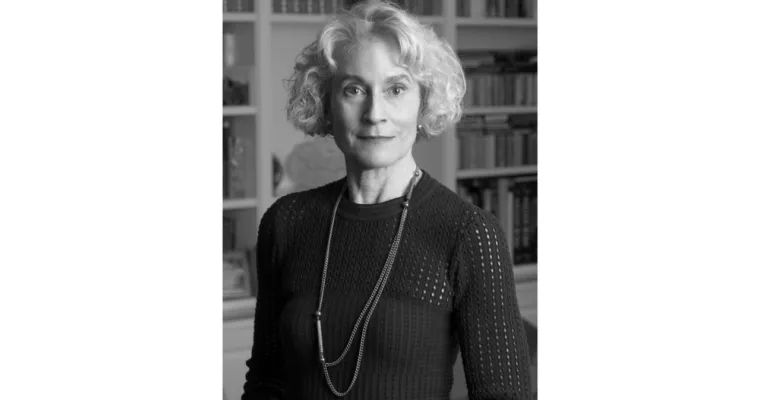
I am extremely honored by the gift of the Principality Prize and feel great gratitude to the Rencontres Philosophiques and the Fondation Prince Pierre de Monaco for recognizing my work. I would like to thank the founding members of the Rencontres Philosophiques de Monaco –Charlotte Casiraghi, Robert Maggiori, and Raphael Zagury-Orly – for their role in the selection. And I am thrilled that this prize honors philosophy, a commitment that I think really urgent for our polarized world, which needs rigorous argument about foundational ideas if it is to survive at all.
Because of my teaching commitments I am sadly unable to be present at the ceremony, but I look forward to giving an online lecture to you all at a time to be arranged. Let me now just say a few words about my work.
I think of my work as held together by a set of themes and problems: roughly, the problem of how to live with dignity, as a particular kind of animal, in a world of events that we do not fully control. My work in political philosophy focuses on issues of vulnerability; it tries to develop an approach that will come to grips with human need better than some previous approaches, and it focuses on the vulnerability of the world’s most oppressed people and its very oppressed animals. And the Capabilities Approach tries to use the needs of creatures for a wide range of human activities as the basis for a richer account of what development ought to deliver to people – and, more recently, to non-human animals.
Thus my work on the emotions, from the Fragility of Goodness through to Upheavals of Thought, Hiding From Humanity, Anger and Forgiveness, and The Monarchy of Fear, is not actually at a distance from these political reflections. For emotions, as I conceive them, revolve around our investment in, attachment to, things out there in the world that we do not perfectly control. Like the ancient Greek and Roman Stoics — though strongly disagreeing with their normative views — I think of emotions as involving quite a lot of intelligence and selectivity, and I argue that the mental activity involved in emotion typically revolves around our intense needs for what the Greeks called « external goods, » or « goods of fortune »: people to love us, a safe environment, food, shelter, and so forth. It is when we have invested such things with great importance that we feel fear when they are threatened, anger when someone else assails them, grief at their loss, and so forth. I am currently writing a book on grief and loss – returning to Greek tragedy and using it as a lens to illuminate the life and death of my daughter Rachel, who died at age 47 in 2019 of a fungal infection after surgery, and who at the time of her death was a lawyer for the rights of animals.
So: need for external objects is the lens through which I approach both personal attachments and political issues. And unlike the Stoics, I argue that many of these attachments are wise and necessary, parts of a flourishing life. That is why it is so important that all inhabitants are supported by their surrounding society in their striving for these things.
Again, my warmest thanks for your generosity and especially for your support of philosophy.
Martha C. Nussbaum